

Magnetic Resonance Imaging (MRI) technologists are very crucial in the contemporary healthcare sector, as they apply a high level of imaging technology to assist physicians in diagnosing and treating medical conditions.
The need for MRI technologists remains on the steady increase in the state of Massachusetts in 2025, and hospitals and diagnostic facilities are in search of highly qualified specialists.
The first step to this lucrative profession is to select the appropriate MRI tech program in Massachusetts. Accredited schools to licensing, and knowledge of what you want to do were the surest ways to get certified and a job.
MRI Tech Programs in Massachusetts (2025)
Massachusetts boasts several reputable colleges, universities and medical centres to provide the MRI technology programs. The programs are aimed at providing the students with theoretical and practical clinical experience.
In 2025, students in Massachusetts can expect:
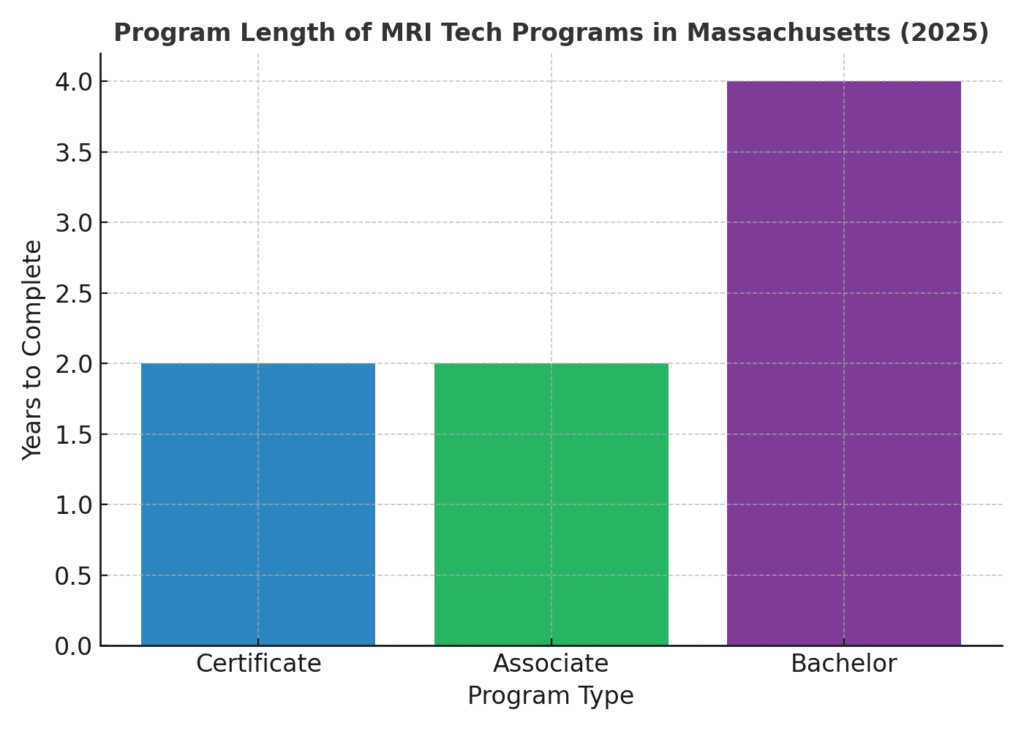
- Program Length: Typically 18 to 24 months for certificate programs, or 2 to 4 years for associate and bachelor’s degrees.
- Accreditation: Most programs are accredited by the Joint Review Committee on Education in Radiologic Technology (JRCERT) or recognised by the American Registry of Radiologic Technologists (ARRT).
- Clinical Training: Around 1,000–1,200 clinical hours in hospitals, clinics, or imaging centres across Massachusetts.
- Hybrid Learning: Several programs now combine in-person labs with online coursework, making education more flexible for working adults.
Massachusetts is among the best places to become an MRI technologist, with the state having a strong healthcare sector, in which the world-ranked hospitals are situated in Boston, Worcester and Springfield.
Not only do graduates acquire technical knowledge, but they also have opportunities of having excellent employment in the year 2025.
Top Accredited MRI Schools and Colleges in Massachusetts
Massachusetts offers a variety of accredited programs for students who want to become MRI technologists. Healthcare employers recognise these programs and meet the standards required for ARRT certification. Some of the top options in 2025 include:
Massachusetts College of Pharmacy and Health Sciences (MCPHS) – Boston
- Offers an Associate in Radiologic Technology with MRI concentration. Students gain access to Boston’s top medical centres for clinical placements.
Bunker Hill Community College – Boston
- Provides an MRI Certificate Program for those already licensed in radiography or another allied health field. This is one of the most affordable pathways.
Springfield Technical Community College – Springfield
- Known for its Associate Degree in Radiologic Technology, followed by specialised MRI coursework. Students get practical training at local hospitals.
University of Massachusetts Medical School – Worcester
- While primarily focused on medical education, UMass partners with regional hospitals to provide MRI training opportunities for radiology students.
Most of these institutions report strong job placement rates (80–90%) within six months of graduation, thanks to partnerships with healthcare facilities across the state.
Program Length, Curriculum & Clinical Hours: What to Expect
The structure of MRI tech programs in Massachusetts balances classroom education with real-world experience. In 2025, the typical breakdown looks like this:
Length of Study:
- Certificate programs: 18–24 months
- Associate degree programs: 2 years
- Bachelor’s degree programs: 4 years
Core Curriculum Subjects:
- Anatomy and Physiology
- Patient Care and Ethics
- Cross-Sectional Imaging
- MRI Physics and Instrumentation
- Image Evaluation and Safety Protocols
Clinical Training:
- Students spend 1,000–1,200 clinical hours in hospitals or imaging centres. This hands-on experience is crucial, as it allows trainees to operate MRI equipment, work with patients, and practice safety measures under supervision.
Technology Focus:
- Massachusetts programs increasingly emphasise digital imaging systems, advanced MRI sequences, and AI-based diagnostic tools to match current healthcare trends.
This combination of classroom and clinical learning ensures that graduates are fully prepared to pass the ARRT certification exam and transition smoothly into professional practice.
Admissions, Prerequisites & Fastest Path to Certification
Getting into an MRI tech program in Massachusetts requires meeting certain prerequisites. In 2025, most schools expect:
- Educational Background: A high school diploma or GED with strong grades in math and science.
- College Credits: Some programs require prior coursework in anatomy, physiology, and medical terminology.
- Health Clearances: Students must pass a background check, provide immunisation records, and complete CPR certification.
- Licensure (for Certificate Programs): If applying for an advanced certificate, you may already need to be a registered radiologic technologist (ARRT certified) or licensed in another imaging field.
Fastest Path to Becoming an MRI Tech in Massachusetts (2025):
- Enroll in an 18–24 month certificate program if you already hold a radiography license.
- Complete your clinical hours while in school.
- Sit for the ARRT MRI Certification Exam immediately after graduation.
With this route, motivated students can become certified MRI technologists in just 2 years, while those starting fresh with an associate degree may take closer to 3 years, including prerequisites.
Costs, Financial Aid & Typical Salary Outlook (2025 Data)
The cost of MRI tech programs in Massachusetts varies depending on the institution and degree level. Updated 2025 estimates include:
- Community Colleges: $8,000 – $15,000 total for an associate degree.
- Universities: $20,000 – $45,000 per year for bachelor s-level programs.
- Certificate Programs: $12,000 – $25,000 depending on duration and clinical placements.
Financial Aid Options:
- Federal Pell Grants and Stafford Loans
- Massachusetts state scholarships for healthcare students
- Institutional scholarships from colleges like MCPHS and UMass
- Work-study and hospital-sponsored tuition assistance programs
Salary Outlook in Massachusetts (2025):
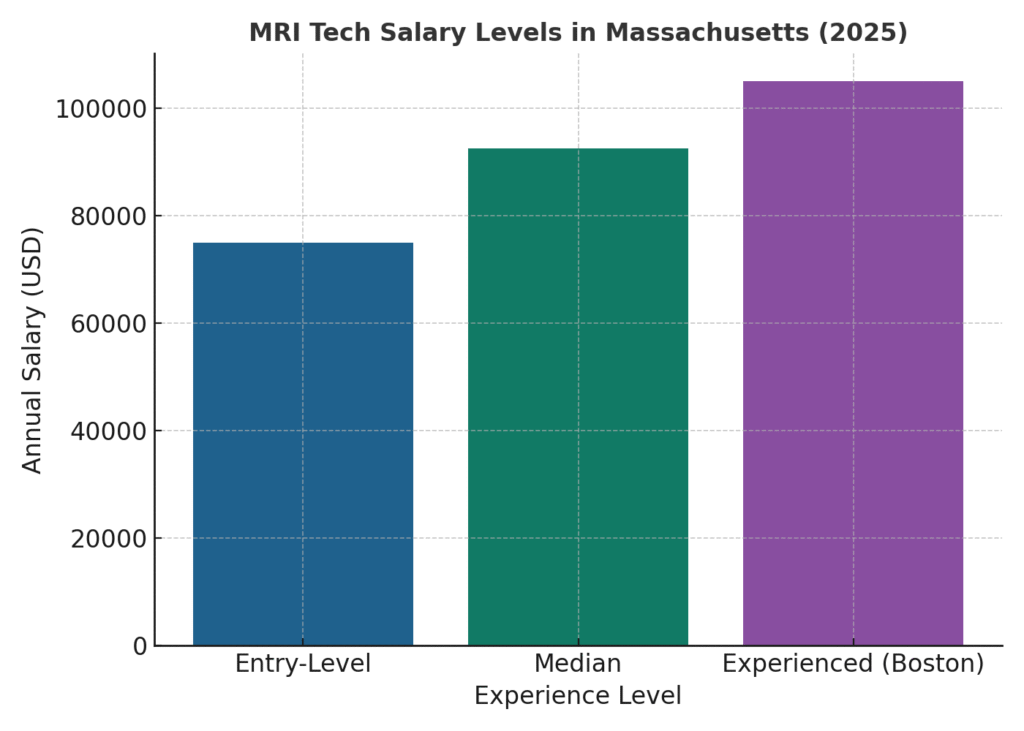
- Median annual wage: Around $92,500 (higher than the national average of ~$82,000).
- Entry-level MRI techs: $70,000 – $78,000 annually.
- Experienced technologists in Boston: $105,000+ per year, especially in major teaching hospitals.
These strong salary figures, combined with excellent job security, make Massachusetts one of the most attractive states to pursue an MRI technologist career.
Certification, Licensing & Job Market — Employers Hiring in Massachusetts
To work as an MRI technologist in Massachusetts, graduates must complete certification and licensing steps after finishing their program.
Certification Requirements (2025):
- Pass the ARRT MRI Certification Exam.
- Maintain certification with 24 continuing education credits every two years.
- Adhere to ARRT’s ethics and professional standards.
Licensing in Massachusetts:
The Massachusetts Department of Public Health requires MRI technologists to hold a valid state radiologic technologist license. Applicants must provide proof of ARRT certification and pay the licensing fee.
Job Market in 2025:
Demand for MRI technologists in Massachusetts remains high due to the state’s advanced healthcare system. According to the Bureau of Labour Statistics, employment growth is projected at 7–9% over the next decade, with thousands of new imaging jobs opening in the Boston area alone.
Top Employers Hiring MRI Techs in Massachusetts:
- Massachusetts General Hospital (Boston)
- Brigham and Women’s Hospital (Boston)
- Beth Israel Deaconess Medical Centre (Boston)
- UMass Memorial Medical Centre (Worcester)
- Baystate Medical Centre (Springfield)
- Steward Health Care and regional outpatient imaging centres
With excellent starting salaries and opportunities for advancement into supervisory or specialised MRI roles, the career outlook for Massachusetts-trained technologists is brighter than ever in 2025.
Conclusion
An MRI tech program at Massachusetts would provide students with a world-class education, clinical training, and one of the best job markets in the nation.
Whichever route you decide to take, be it a community college certificate or a university degree, the journey will eventually get you to the high-demand, high-paying, and fulfilling work in patient care.
With the help of an accredited program, passing the ARRT exam and state licensure, you can start a great career in MRI technology within 2-3 years.
FAQs
How much do MRI techs make in Massachusetts?
MRI technologists in Massachusetts earn an average of $92,500 per year in 2025, with experienced professionals in Boston making over $105,000 annually.
What is the fastest way to become an MRI tech?
The quickest path is completing an 18–24 month certificate program if you already hold a radiography license, allowing certification in just about 2 years.
What degree is best for an MRI tech?
An Associate of Science in Radiologic Technology is the most common and efficient degree, while a Bachelor’s degree offers broader career advancement opportunities.
How much does the MCPHS MRI program cost?
The MRI-related programs at MCPHS University typically cost around $35,000–$45,000 per year in tuition as of 2025, not including fees and clinical expenses.