

The use of the newest technology device, Magnetic Resonance Imaging (MRI), is one of the latest technological implementations in modern healthcare.
In the background of all scans, there is a competent MRI technician who will be in charge of running the machine, taking care of the patients, and giving the physicians correct images to diagnose the diseases.
However, there are specific requirements that the aspiring professionals have to fulfill before joining this gratifying career. These needs vary between formal education and technical training and certifications, and clinical experience.
Knowledge on the qualifications of MRI tech is an important step to assist MRI tech students prepare for their future profession, rather than just equipping them with the appropriate skills, knowledge and qualifications to compete effectively in the competitive health care sector.
Educational Requirements for MRI Technicians
Being an MRI technician starts with learning. A high school diploma or GED is the prerequisite most employers are seeking in their job applicants.
Students planning to pursue this career in high school are advised to concentrate on courses that are related to science and math, like biology, chemistry, and physics courses which are an excellent foundation for medical imaging.
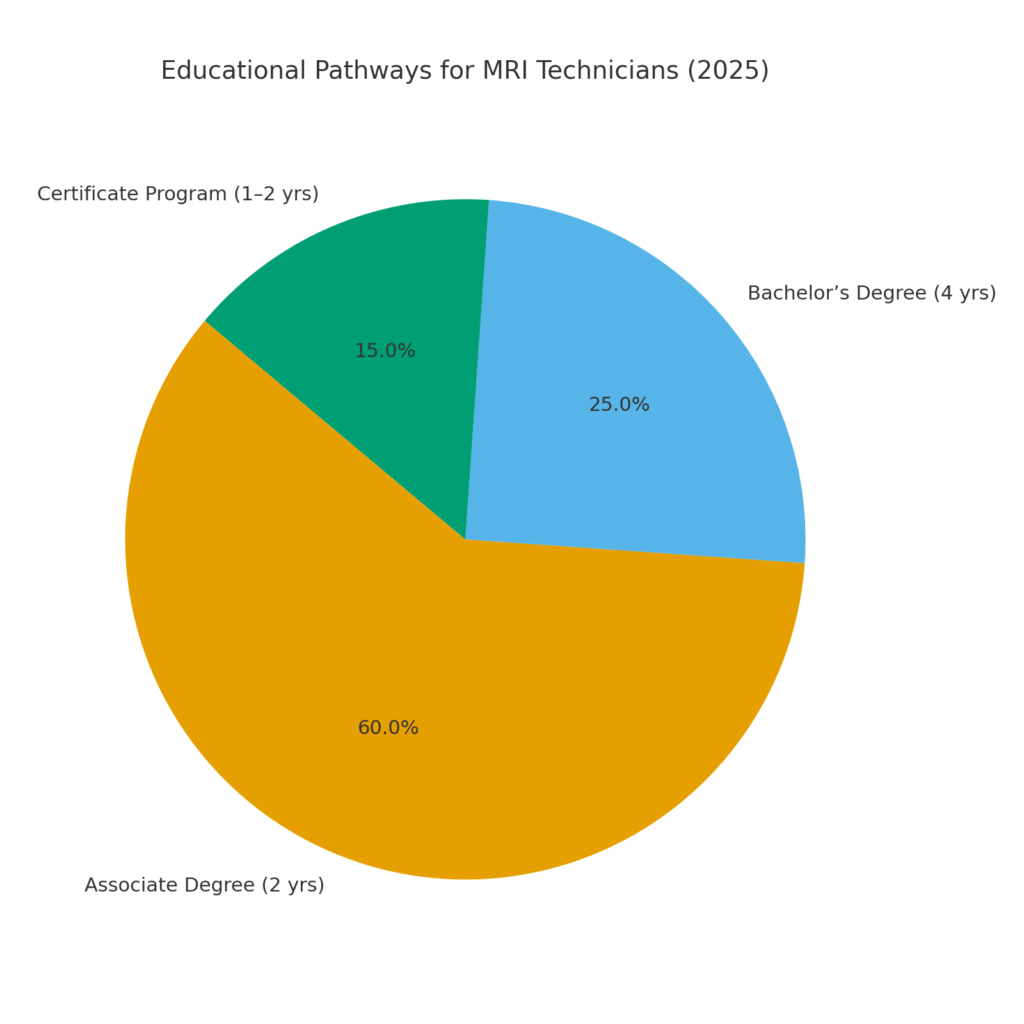
After high school, aspiring MRI techs typically pursue higher education through:
- Associate Degree (2 years): The most common pathway is an associate degree in Radiologic Technology or MRI. These programs cover anatomy, patient care, imaging principles, and medical ethics.
- Bachelor’s Degree (4 years): Some students opt for a bachelor’s Degree for broader career opportunities and advancement into leadership or teaching positions.
- Certificate Programs (1–2 years): For individuals who already hold a degree in a related healthcare field, certificate programs provide a faster route to becoming an MRI technologist.
In the United States, completing an accredited program approved by the Joint Review Committee on Education in Radiologic Technology (JRCERT) is often required to qualify for certification exams.
Educational prerequisites are not only about completing courses but also about developing strong problem-solving skills, learning patient care, and understanding how medical imaging contributes to diagnosis.
Core Skills and Knowledge Needed to Become an MRI Tech
Education alone is not enough to succeed as an MRI technician. To truly thrive in this career, candidates must develop a strong mix of technical expertise, interpersonal skills, and physical stamina.
- Technical Skills: MRI techs must be proficient with imaging equipment, computer systems, and digital imaging software. A deep understanding of human anatomy, physiology, and cross-sectional imaging is also essential to capture accurate scans.
- Interpersonal Skills: Since MRI technicians work directly with patients, strong communication is a must. Many patients feel anxious during an MRI scan, and a compassionate, calming approach can make a big difference in their experience.
- Problem-Solving Abilities: MRI techs often troubleshoot technical issues and must adapt quickly if a scan doesn’t go as planned. Critical thinking helps ensure accurate results.
- Physical Requirements: This job often requires standing for long hours, moving patients onto the scanning table, and occasionally assisting patients with mobility challenges. A certain level of physical fitness and stamina is necessary.
Developing these core skills ensures MRI techs are not only competent in using the machine but also effective in delivering a safe and comfortable patient experience.
Certification and Licensing Requirements for MRI Techs
Once educational and skill-based prerequisites are met, the next critical step is obtaining certification and licensing. In the United States, most employers require MRI techs to be certified by a recognized body, with the American Registry of Radiologic Technologists (ARRT) being the gold standard.
- ARRT Certification: Candidates must complete an accredited program and then pass the ARRT certification exam in MRI. This credential demonstrates competency and professional standards.
- State Licensing: Some states require MRI technicians to obtain additional licenses. Licensing requirements vary, so it’s important to check with the state’s health department or medical board.
- Continuing Education: To maintain ARRT certification, MRI techs must complete 24 continuing education (CE) credits every two years. This ensures they stay updated with the latest imaging technologies, safety protocols, and best practices.
Certification not only boosts employability but also increases salary potential. Employers prefer certified MRI techs because they demonstrate a commitment to professional growth and patient safety.
Clinical Training and Hands-On Experience
Clinical training is also one of the most significant MRI tech prerequisites. Whereas the mode of learning in classes offers theoretical information, practical learning guarantees that a student can implement their knowledge in the medical environment.
The majority of accredited programs expect 1,000+ hours of supervised clinical experience, which is usually acquired in hospitals, imaging centers or outpatient clinics. The students will gain hands-on experience in the following areas during such rotations:
- Operating MRI Machines: Learning how to position patients, set scanning parameters, and capture high-quality images.
- Patient Care: Assisting patients who may be nervous, claustrophobic, or in pain, while ensuring safety throughout the procedure.
- Safety Protocols: Understanding MRI safety zones, handling magnetic hazards, and following strict radiation-free imaging guidelines.
- Teamwork: Collaborating with radiologists, nurses, and other healthcare professionals to ensure accurate diagnoses.
Clinical training bridges the gap between theory and practice, preparing students to handle real-life challenges. By the end of this phase, aspiring MRI techs not only gain technical confidence but also develop the bedside manner essential for patient-centered care.
Additional Prerequisites for a Career in MRI Technology
Apart from education, certification, and clinical training, there are several additional prerequisites that every MRI tech must fulfill before entering the workforce. These include:
- Background Checks and Drug Screening: Most hospitals and clinics require a clean criminal background and drug test results before allowing students into clinical rotations or employment.
- Health Screenings and Immunizations: Since MRI techs work in healthcare environments, they must be vaccinated against diseases such as hepatitis B, measles, and tuberculosis to protect both patients and staff.
- CPR and First Aid Certification: Basic life support (BLS) or CPR certification is mandatory, ensuring MRI techs can respond quickly to emergencies.
- Professional Ethics and HIPAA Compliance: MRI technologists must understand patient confidentiality laws and maintain ethical standards in handling sensitive health information.
These additional prerequisites might seem minor compared to education and certification, but they play a vital role in ensuring MRI techs are fully prepared for the responsibilities of the job. Meeting these requirements reflects professionalism and commitment to patient safety.
Career Outlook and Salary Expectations for MRI Techs
Meeting all the MRI tech prerequisites opens the door to a career with strong job security and rewarding pay. According to the U.S. Bureau of Labor Statistics (BLS), employment for MRI technologists is projected to grow by 6% from 2022 to 2032, faster than the average for most occupations. An aging population and advancements in diagnostic imaging drive this demand.
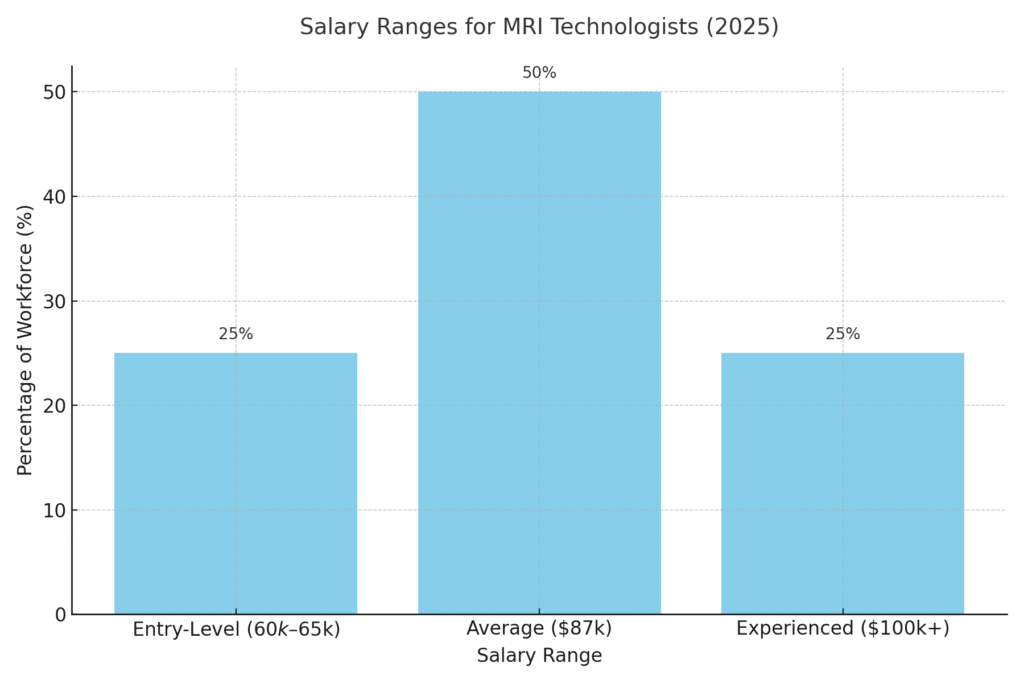
In terms of salary, MRI techs enjoy highly competitive pay. As of 2025:
- The average annual salary for MRI technologists in the U.S. is around $87,000.
- Entry-level MRI techs typically earn $60,000–$65,000 per year, depending on location and facility.
- Experienced MRI technologists in top-paying states like California, New York, and Massachusetts can earn well over $100,000 annually.
Beyond salary, MRI techs benefit from flexible work environments, including hospitals, outpatient centers, and specialized diagnostic clinics. There are also advancement opportunities into supervisory roles, education, or specialized imaging fields.
With steady job growth and above-average salaries, becoming an MRI tech is a career path that combines financial stability with the fulfillment of contributing to patient care.
Final Words
The path to MRI technician is a challenging one, and every requirement can contribute to the development of a competent, self-assured, and professional member of society.
These steps can be taken to secure MRI techs the proper education, certification, and practical training of the job, as well as satisfy health and legal standards, so that they are equipped to meet the demands of the job.
To students who are thinking of this route, you must keep focused, dedicated and also active in the development of technical and personal skills. The future of MRI techs is brilliant and promising with high salary prospects, employment opportunities and the ability to transform the lives of the patients positively.
With these MRI tech requirements, future professionals establish themselves on a path to a successful career in one of the most developed and satisfying professions in healthcare.
FAQs
What are the prerequisites for MRI?
To become an MRI tech, you need at least a high school diploma or GED, followed by an accredited degree or certificate program in radiologic technology or MRI. Clinical training, certification (like ARRT), and CPR certification are also essential. Additional prerequisites may include background checks and health screenings.
What qualifications do you need to run an MRI?
MRI technicians must complete an accredited radiologic or MRI program, obtain certification through ARRT or an equivalent body, and fulfill state licensing requirements if applicable. They also need hands-on clinical training to operate MRI equipment safely. Strong technical and communication skills are key qualifications.
What does an MRI tech need?
An MRI tech needs formal education, certification, and supervised clinical experience. They also require technical skills to handle MRI machines, patient-care skills to assist and comfort patients, and knowledge of safety protocols. Continuing education is needed to maintain certification and stay updated with new imaging technologies.