
Have you ever wondered what MRI technologists earn in 2025? You are not the only one. As diagnostic imaging in demand increases, MRI technologists still remain among the most stable and highly compensated careers in the healthcare field.
Whether in hospitals or in specialized imaging centers, these proficient technicians not only run the expensive MRI scanners but also they are also a key role in patient care.
In this one, we will subdivide the average MRI technologist pay in 2025, including the lowest payer, the highest payer, the hourly rate, and the benefits of certifications in increasing your salary.
This salary guide will provide a well-defined, data-driven overview of the amount of money you will (or will not) earn in the field, whether you are new to it or not.
What Is the Average MRI Tech Salary in 2025?
As of 2025, the average MRI technologist salary in the United States is approximately $88,750 per year, according to the latest healthcare workforce data and industry surveys. This figure represents a steady increase of around 3.5% compared to the previous year, reflecting growing demand for skilled MRI professionals.
For context:
- Median annual wage: $88,750
- Hourly rate (average): $42.67
- Lowest 10% earn: around $64,000 per year (entry-level or smaller facilities)
- Highest 10% earn: over $110,000 per year (experienced techs in high-demand regions)
The salary scale may go a long way by the location, experience, certifications and the type of employer. MRI techs in large metropolis hospitals or in specialty clinics are usually paid considerably higher than those in smaller clinics.
Having a positive job outlook and an estimated growth rate of more than 9 percent by the year 2030, MRI technology will continue to be a well-paying and desirable career in health care in the year 2025.
MRI Technologist Salary by Experience: Entry, Mid, and Senior Levels
Experience plays one of the biggest roles in determining how much an MRI technologist earns. While new graduates typically start at lower pay scales, salaries can increase quickly with hands-on expertise, advanced certifications, and specialized skills.
Here’s a detailed breakdown of MRI tech salaries by experience level in 2025:
Entry-Level (0–2 years): $64,000 – $76,500 annually
- New graduates or those just entering the field usually begin at community hospitals, outpatient imaging centers, or rural facilities.
Mid-Level (3–7 years): $77,000 – $94,000 annually
- At this stage, techs often handle more complex imaging procedures and may train junior staff or supervise workflow, resulting in higher compensation.
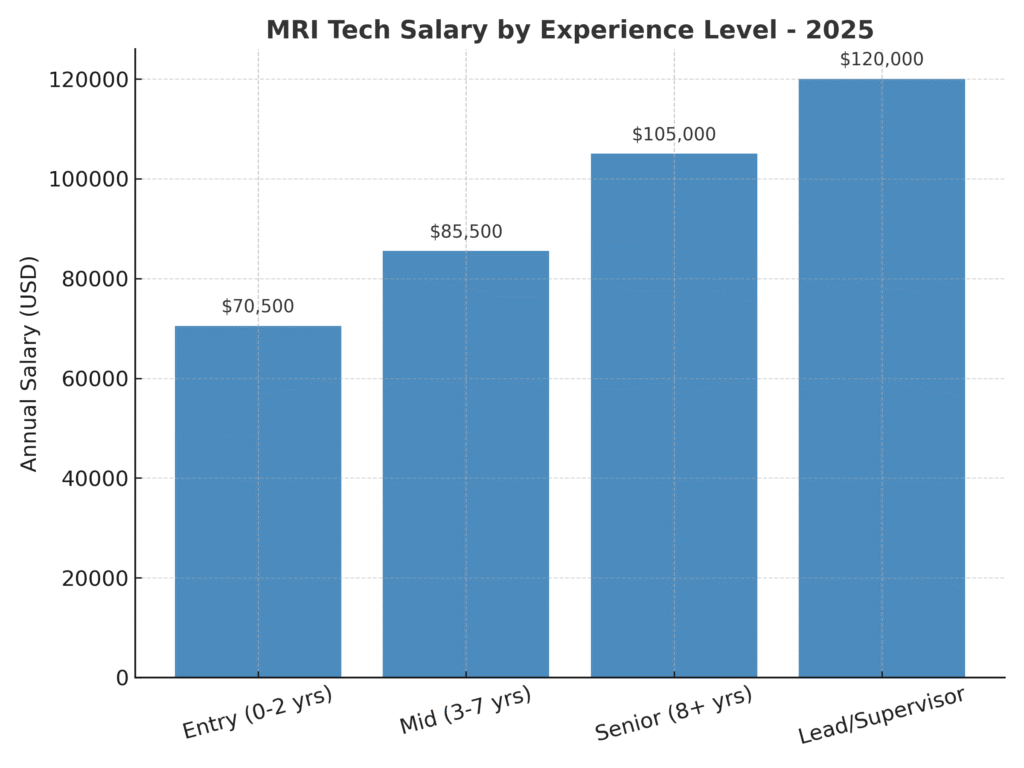
Senior-Level (8+ years): $95,000 – $115,000+ annually
- Veteran technologists with extensive experience often work in major hospitals or teaching institutions, sometimes holding specialized roles or leadership positions.
- Lead MRI Technologists or Supervisors can earn up to $125,000 per year, especially in high-cost metropolitan areas like New York, Los Angeles, or Chicago.
This steady salary growth is one of the reasons why MRI technology is a top-choice allied health career. Unlike many other healthcare fields, MRI technologists can see significant pay increases without needing to pursue years of additional schooling.
Top-Paying States & Cities for MRI Techs
Where you work can make a major difference in how much you earn. Certain states and metropolitan areas offer substantially higher salaries due to demand, cost of living, and healthcare system capacity.
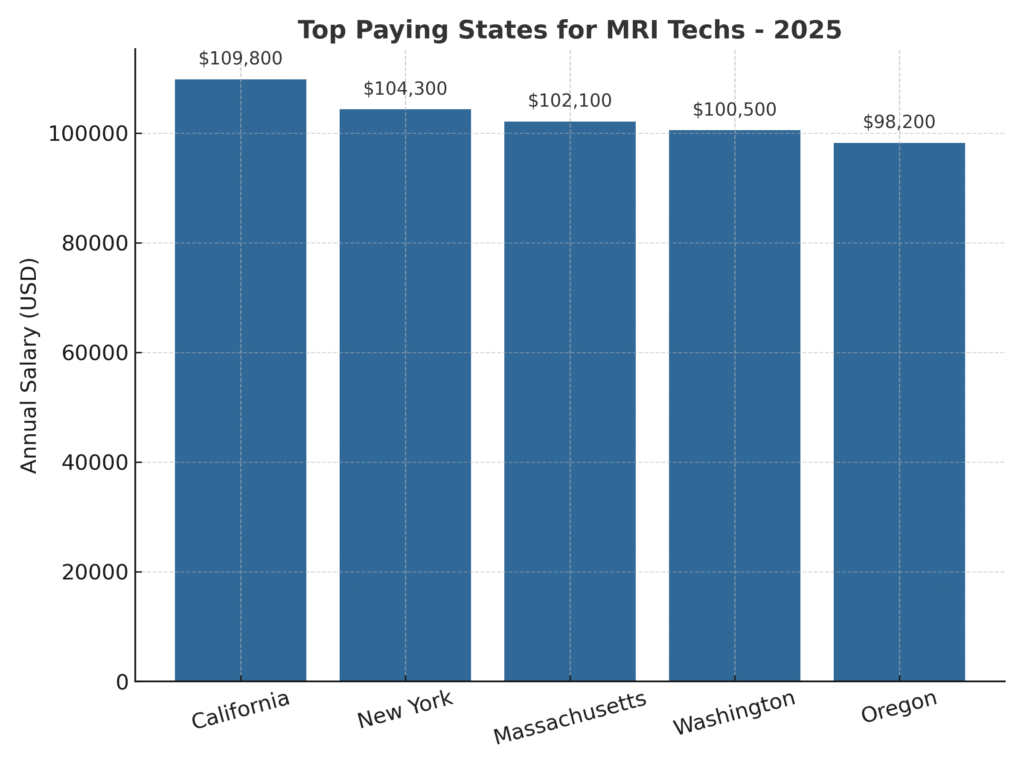
Here are the top-paying states for MRI techs in 2025:
- California – Average salary: $109,800/year
- New York – Average salary: $104,300/year
- Massachusetts – Average salary: $102,100/year
- Washington – Average salary: $100,500/year
- Oregon – Average salary: $98,200/year
And the highest-paying cities for MRI technologists include:
- San Francisco, CA – $118,000/year
- New York City, NY – $112,500/year
- Boston, MA – $109,400/year
- Seattle, WA – $106,800/year
- Portland, OR – $101,600/year
It is worth mentioning that the living cost in these regions is also high, but so is the salary. MRI technologists prefer mid-range wages in Texas, Florida, or Colorado, where the cost of living is lower and pay is competitive, which can be taken home.
The issue of location strategy is essential in earning you a lot of money as an MRI tech in 2025. A change to a shortage-bonus hospital system or high demands region can greatly increase your annual earnings.
Hourly Rates, Overtime, and Shift Differentials Explained
It is equally important to know your hourly rate as an MRI technologist in addition to knowing your annual salary. Most health care institutions are offering hourly wages, and as an extra, they are offering a bonus for overtime, on weekends, or during night shifts, and this can be very lucrative.
In 2025, the average hourly pay for MRI techs in the U.S. is $42.67 per hour, with most wages ranging from $32 to $55 per hour, depending on location, experience, and facility type.
Here’s a quick breakdown:
- Entry-level hourly rate: $31–$36/hr
- Mid-level hourly rate: $37–$45/hr
- Senior-level hourly rate: $46–$55+/hr
Overtime Pay:
- Most MRI technologists are eligible for time-and-a-half, meaning if your base hourly rate is $45, your overtime rate would be $67.50 per hour.
- Many hospitals and diagnostic centers offer overtime shifts, especially during staffing shortages or busy seasons.
Shift Differentials:
- Evening shifts: $2–$5 extra per hour
- Night shifts: $4–$8 extra per hour
- Weekend or holiday shifts: $5–$10 extra per hour
For MRI techs who prefer flexible schedules, these differentials can add thousands of dollars to their annual income. A tech working nights and weekends consistently could earn an additional $7,000–$12,000 per year, depending on the facility.
By understanding and strategically choosing shifts, many technologists boost their income without changing employers or relocating.
Key Factors That Impact MRI Tech Salaries
Not all MRI technologists earn the same salary — and that’s because multiple factors can significantly influence your earning potential. In 2025, employers are especially valuing certifications, specialized skills, and experience in advanced imaging technologies.
1. Certifications & Education:
- Having ARRT (American Registry of Radiologic Technologists) certification in MRI can increase salaries by 8% to 15% on average.
- Advanced credentials like MR Safety Officer or specialty imaging certifications often lead to higher-paying roles.
2. Employer Type:
- Hospitals and academic medical centers typically offer the highest salaries, averaging $92,000–$110,000 annually.
- Outpatient imaging centers average around $80,000–$88,000 annually.
- Physician offices or smaller clinics pay less but offer better work-life balance.
3. Specialties & Advanced Skills:
- MRI technologists who work in neuroimaging, cardiac MRI, or pediatric imaging can earn premium pay due to their niche expertise.
- Experience with cutting-edge 3T or 7T MRI scanners can also boost salaries by 10–20% in competitive markets.
4. Geographic Mobility:
- Willingness to relocate or work in high-demand states can result in sign-on bonuses of $5,000–$15,000, plus relocation assistance.
These factors combined can make the difference between earning a baseline salary and securing top-tier compensation in the field.
6. Salary Negotiation, Career Growth, and 2025 Outlook for MRI Technologists
Knowing the average pay is one thing — but understanding how to maximize your MRI tech salary is what sets top earners apart. In 2025, with strong demand and staffing shortages in many states, MRI technologists are in a great position to negotiate better pay and benefits.
Salary Negotiation Tips for MRI Techs:
- Do your research: Before accepting a job offer, compare salary data for your state and city. Employers respect candidates who know their market value.
- Highlight certifications: Having ARRT credentials, advanced MRI certifications, or safety training can justify a higher starting pay.
- Leverage multiple offers: If you have interviews in various locations, use competitive offers as leverage to negotiate salary or shift differentials.
- Ask about bonuses: Many hospitals and imaging centers offer sign-on bonuses, retention bonuses, or tuition reimbursement programs.
Career Growth Opportunities:
- Lead MRI Technologist: Supervising staff and managing workflow can boost annual pay to $115,000+.
- MRI Clinical Specialist or Educator: Teaching or training roles often come with higher salaries and flexible schedules.
- Advanced Imaging Specialist: Working in cardiac, neuro, or research MRI departments can push earnings above $120,000 annually.
- Management Roles: MRI techs who move into imaging management or director-level roles can earn $130,000+ per year.
Industry Outlook for 2025 and Beyond:
The current healthcare employment outlooks indicate that, of all the other healthcare occupations, MRI technologist jobs will experience an increase of 9% by the year 2030. This demand is mainly fuelled by the development of noninvasive diagnostic imaging, the growth of the elderly population and the increasing use of MRI in the outpatient setting.
To recruit competent MRI technologists, hospitals, independent clinics, and research centers have been aggressively recruiting qualified MRI technologists, and are typically providing better pay packages, sign-on bonuses and flexible schedules, to encourage qualified applicants.
When you are joining the industry or are already involved in the industry, 2025 is a good year to establish a stable and well-paying career in MRI technology.
FAQs
Where do MRI techs make the most money?
MRI techs earn the highest salaries in California, with an average annual pay of around $109,800 in 2025.
What is the salary of an MRI technician in Pakistan?
In Pakistan, MRI technicians typically earn between PKR 800,000 to PKR 1,500,000 per year, depending on experience and hospital type.
How much do MRI technologists make?
In the U.S., MRI technologists earn an average salary of $88,750 per year in 2025, with top earners making over $110,000.
Which is better, CT or MRI tech?
Both are rewarding, but MRI techs usually earn slightly higher salaries and have more opportunities in specialized imaging fields compared to CT techs.
1 thought on “Average MRI Tech Salary”